Pearson Edexcel · GCSE · Psychology
Course version: 1PS0 · Version from Sept 2017
Understand possible ways to prevent blind obedience to authority figures
Full specification wording
Social influence: 5.1.6 Understand possible ways to prevent blind obedience to authority figures
Blind obedience occurs when individuals follow orders from an authority figure without questioning the moral implications.
Checked against the Pearson Edexcel 1PS0 specification (opens in a new tab) on .
- Point 6 of 6
- 3 key terms
Study notes
From the checked teaching notes for this specification point.
The idea
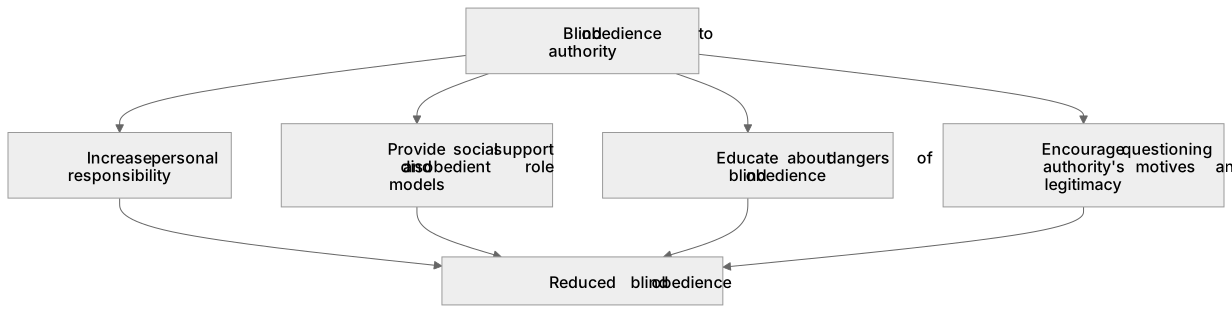
Blind obedience occurs when individuals follow orders from an authority figure without questioning the moral implications. Preventing this requires strategies that empower individuals to resist unjust commands. One method is increasing personal responsibility, ensuring individuals know they will be held accountable for their actions, rather than shifting blame to the authority. Providing social support or role models of disobedience also helps; when one person defies an unjust order, others are more likely to follow suit. Education about the dangers of blind obedience raises awareness. Finally, encouraging individuals to question the motives and legitimacy of the authority figure allows them to critically evaluate commands before acting.
What earns the marks
- Identify increasing personal responsibility as a method to reduce blind obedience.
- Explain how the presence of a disobedient role model provides social support and encourages defiance.
- Recognise that educating people about the psychological mechanisms of obedience can help them resist unjust orders.
- Describe how questioning the legitimacy or motives of an authority figure can prevent blind obedience.
Common mistakes and how to put them right
Confusing preventing obedience with preventing conformity.
Put it right by focusing specifically on strategies related to authority figures rather than peer groups.
Assuming that all obedience is bad.
Put it right by specifying that these strategies aim to prevent blind or destructive obedience to unjust orders, not everyday lawful compliance.
Stating that people cannot resist authority.
Put it right by explaining that situational factors, such as seeing others disobey, significantly increase the likelihood of resistance.
Exam tips
- Be prepared to apply strategies for preventing blind obedience to novel scenarios provided in the exam.
- Use specific psychological terminology, such as 'personal responsibility' and 'disobedient role models', when explaining how to reduce obedience.
- Remember to link the prevention strategy directly to how it weakens the influence of the authority figure.
Try the lesson
The start of the Social influence: 5.1.6 Understand possible ways to prevent blind obedience to authority figures lesson, made from checked teaching notes for this specification point.
Have a go first
Which of the following is a recognised way to help prevent blind obedience to an authority figure?
Listen
Blind obedience occurs when individuals follow orders from an authority figure without questioning the moral implications. Preventing this requires strategies that empower individuals to resist unjust commands. One method is increasing personal responsibility, ensuring individuals know they will be held accountable for their actions, rather than shifting blame to the authority. Providing social support or role models of disobedience also helps; when one person defies an unjust order, others are more likely to follow suit. Education about the dangers of blind obedience raises awareness. Finally, encouraging individuals to question the motives and legitimacy of the authority figure allows them to critically evaluate commands before acting. A strong answer earns marks for these points. Identify increasing personal responsibility as a method to reduce blind obedience. Explain how the presence of a disobedient role model provides social support and encourages defiance. Recognise that educating people about the psychological mechanisms of obedience can help them resist unjust orders. Describe how questioning the legitimacy or motives of an authority figure can prevent blind obedience. A common slip: Confusing preventing obedience with preventing conformity. Instead, focusing specifically on strategies related to authority figures rather than peer groups. Exam tip: Be prepared to apply strategies for preventing blind obedience to novel scenarios provided in the exam.
See it
Key words
Say what each word means before you turn the card.
Blind obedience
Try answering aloud or in your head before turning the card.
Personal responsibility
Try answering aloud or in your head before turning the card.
Social support
Try answering aloud or in your head before turning the card.
See every definition
- Blind obedience
- Following orders from an authority figure without questioning the moral implications.
- Personal responsibility
- Ensuring individuals know they will be held accountable for their actions, rather than shifting blame to the authority.
- Social support
- The presence of a disobedient role model, which encourages defiance because when one person defies an unjust order, others are more likely to follow suit.
Label the diagram
Some boxes have lost their names. Pick the right name for each number.
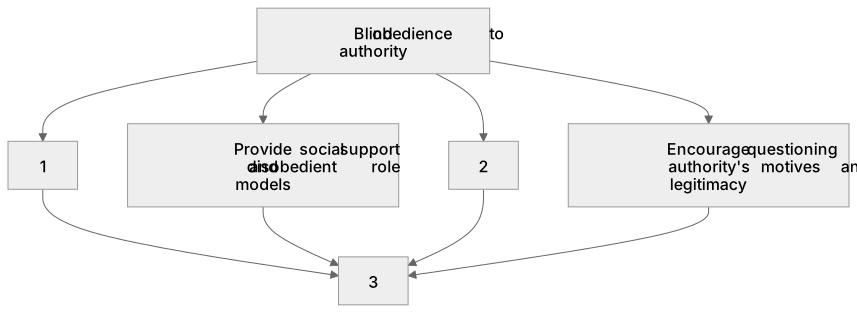
1Box 1
2Box 2
3Box 3
There is more to this lesson
The full lesson goes on to check your understanding and help you earn the marks. Create a free account to carry on, with your progress saved.
A week of Premium from your first lesson · Then the free plan continues · No card, no charge
Test your understanding of Social influence: 5.1.6 Understand possible ways to prevent blind obedience to authority figures
Active recall beats re-reading. Take an instant quiz now to test what you’ve learned and lock it into long-term memory.
A week of Premium from your first lesson · Then the free plan continues · No card, no charge